Subterranean termite control in Naples requires distinct architectural considerations due to coastal sandy soil profiles and high water tables found across Collier County. In neighborhoods like Port Royal, Aqualane…
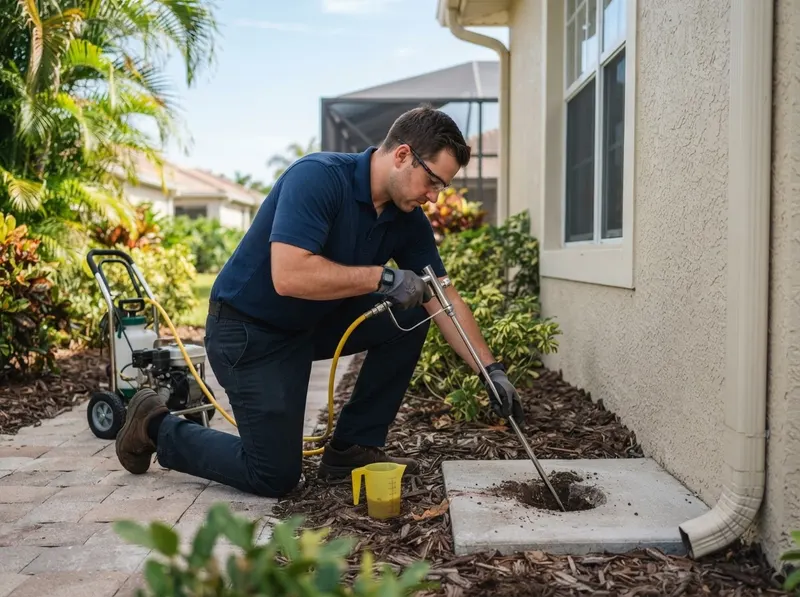
Subterranean termite control in Naples requires distinct architectural considerations due to coastal sandy soil profiles and high water tables found across Collier County. In neighborhoods like Port Royal, Aqualane Shores, and Old Naples, properties often feature stem-wall foundations integrated with wide outdoor travertine decking and expansive screen lanais. Liquid non-repellent termiticides are placed into an 8-inch by 8-inch trench immediately adjacent to the structural slab, or drilled via precision 0.5-inch diamond-core bits through exterior tile joints, delivering an continuous defensive barrier. For sprawling multi-acre parcel envelopes in Golden Gate Estates, low-profile in-ground bait monitoring stations are positioned every 10 to 15 linear feet along the drip line to intercept foraging colonies before structural ingress occurs.
Selecting between a continuous liquid chemical barrier and an in-ground baiting system represents a key operational choice. A non-repellent liquid termiticide provides immediate structural containment by transferring lethal active ingredients between worker termites within 14 to 30 days of exposure, rendering it suitable for active infestations discovered inside baseboards or drywall framing near Naples Pier and Lowdermilk Park. Conversely, baiting stations operate via slow-acting chitin synthesis inhibitors that dismantle the colony's reproductive cycle over 60 to 90 days. The operational trade-off rests on invasive drilling: liquid treatments require mechanical access beneath solid slab extensions and decorative lanais, whereas bait systems require zero slab penetration but demand quarterly monitoring cycles.
Subterranean termite defense differs fundamentally from drywood termite procedures. Drywood species live exclusively within above-ground framing timbers and require structural fumigation or localized spot wood treatments, whereas subterranean species nest exclusively in damp soil beneath the ground and construct vertical mud shelter tubes to reach cellulose framing. Collier County properties adjacent to natural mangrove zones or botanical preserves, including properties bordering Baker Park or the Naples Botanical Garden, experience intensified subterranean termite swarming activity during warm spring evenings following heavy rain events. Foundation treatments do not affect turfgrass root health or marine waterways when deployed according to strict exterior soil depth protocols.
Every job gets a firm, written price after a free on-site visit.
Tell us about your subterranean termite control job in Naples and we'll send a clear, written quote, usually the same day.
 Honeycomb Pest Control